

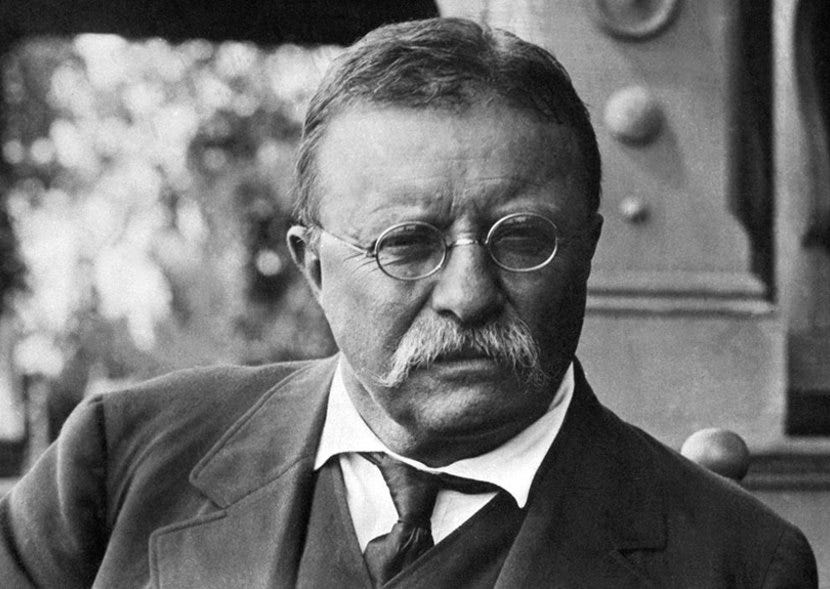
Theodore Roosevelt wrote his autobiography in 1913 after his defeat for a third term as President of the United States. It was a race he could not win and he knew it. The direction of the Republican Party, the nation, and his handpicked replacement President William Taft irked him. He believed the country was headed in the wrong direction and he must do something about it. In a case of both personal responsibility and hubris, he decided to “throw his hat into the ring”, start a new political party, and run for President a third time.
Teddy was a man who had shaped the country by sheer force of will before and during his presidency. The loss of the Oval Office seemed to end his ability to shape the country. He was not one for losing but for overcoming obstacles. His entire life was one of overcoming obstacles. As a child he was plagued with debilitating asthma; in college he experienced the death of his heroric-like father. The birth of his first daughter brought with it the loss of his mother and first wife on the same day.
Here was another obstacle in the way of his sense of responsibility. After losing the presidential race, and still feeling a strong sense of responsibility for the state of the country, he turned his efforts and attention to the medium he knew best: writing. His autobiography is an explanation of his political theory that the President is a “steward of the people.” He chooses events from his life that show his development as a steward, as one responsible for himself and for others.
The Institute of Men is 100% reader supported.
Please help to get the word out by sharing this article.
Many generations have watched their cities burn and become desolate. When the city is gone, the pillars set in stone remain. So do the lives of the greats - they continue to endure, offering us wisdom for life that can stand like a pillar in stone.
TR’s Philosophy
Theodore Roosevelt’s philosophy of politics and life can be summarized in the opening letter of his autobiography.
Justice among the nations of mankind and the uplifting of humanity can only be brought about by those strong and daring men who with wisdom love peace but who love righteousness more than peace. Undoubtedly collective power is essential to this end, but no exercise of collective power will ever avail if the average man does not keep his sense of personal duty, initiative, and responsibility.1
The uplifting of humanity is a core theme of Theodore Roosevelt’s life. He believed it took strong, daring, man in the arena type of men, to bring it about. He also believed deep in his soul that the common man in his everyday life could be one of those strong and daring men who could uplift humanity if they would keep their sense of personal duty, initiative, and responsibility.
Manhood is Responsibility
Prior to becoming responsible for the nations, or a state of a city, or even a family, Theodore Roosevelt believed a man must become responsible for himself. He is not to blame his state of life, his character, or anything else on others or on his circumstances. Blame eroded the spirit of a man. Looking for a handout kept a man stuck, unable to move forward in the great battle of life.
If an American is to amount to anything he must rely upon himself, and not upon the State; he must take pride in his own work, instead of sitting idle to envy the luck of others. He must face life with resolute courage, win victory if he can, and accept defeat if he must, without seeking to place on his fellow man a responsibility which is not theirs.
Envy will make a man idle. It tricks a man into thinking if he gets angry enough at what others have, he can come to have it himself. Or at the very least, he has an explanation for what he has and who he has become. Instead of taking on strenuous action towards a noble cause, a man can get lost in the angry thoughts of his mind, thinking he is altering his situation. In a way, he is altering it, but not for the better.
It is a difficult task to take full responsibility for your life. It begins with an honest look in the mirror each morning, reminding the man looking at back at you that he is responsible for your current state of life. And only that man in the mirror can make the effort to change what his life looks like.
This is a partial quote. The full quote can be found online.